Korean Bank Data Leak: How to Avoid Follow-Up Phishing and Loan Scams
Several South Korean banks have been hit by hacking attacks that leaked customer information, and the government is now warning about a second wave of damage: phishing texts and loan scams that use the stolen details. If you have a Korean bank account, here is what happened and how to protect yourself.
What happened
- According to Yonhap, financial companies including Hana Bank, KB Kookmin Bank and Shinhan Bank suffered back-to-back leaks of customer information in recent hacking attacks.
- The Financial Supervisory Service identified 28 IP addresses linked to the attacks, and the National Police Agency formed a 28-member team to investigate.
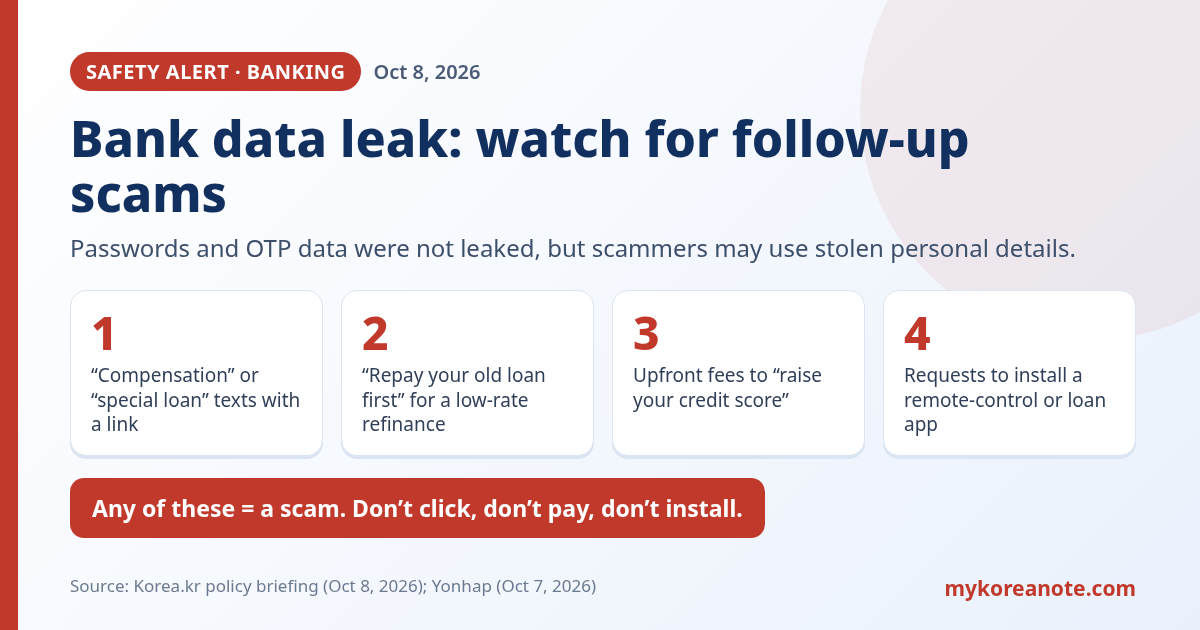
- In a government notice published on October 8, 2026, authorities said passwords and OTP information were not leaked. The concern is that criminals may combine the leaked personal details to make scams look more believable.
- On October 6, financial authorities called in financial companies and told them to run a one-month special response period (which can be extended), open dedicated help desks for affected customers, and strengthen their fraud detection systems.
Four scam patterns to watch for
- Fake compensation offers: texts promising “special loans” or “damage compensation” for leak victims, with a link to click or a number to call.
- Refinancing tricks: a caller offers a low-interest loan but says you must first repay your existing loan, into an account they give you.
- Upfront payments: requests for money before a loan, described as raising your credit score, building a transaction record, or a guarantee fee.
- Malicious apps: requests to install an app to fill in a loan form or run a “security check”. These apps can take control of your phone.
The government’s message is simple: if anyone asks for an upfront payment, early repayment of a loan, or an app installation in connection with a loan, it is a scam.
What this means for foreign workers
Scammers often target people who are less familiar with Korean-language texts and bank procedures. A message that mentions your real name or bank can look official, but that is exactly what leaked data makes possible. A few habits will keep you safe:
- Do not click links in texts about compensation or special loans. Open your bank’s official app or call the number on your bank card instead.
- Never send money to “unlock” or “approve” a loan, and never install an app that a caller asks you to install.
- Ask your bank about the Financial Transaction Safe Blocking Service (geumyung georae ansim chadan service), which the government recommends to block loans opened in your name.
- You can also register with the Personal Information Exposure Accident Prevention System run by the financial authorities, to help prevent identity theft.
- If you think you sent money to a scammer, call your bank or the police at 112 immediately so the account can be frozen. The Financial Supervisory Service also takes reports at 1332.
If a Korean friend or coworker can help, ask them to check any suspicious message with you before you respond.
Sources: Korea.kr policy briefing (Oct 8, 2026, in Korean); Yonhap News Agency (Oct 7, 2026)
Featured photo: Blogtrepreneur / Wikimedia Commons, CC BY 2.0 (cropped)