
Voca Day 08: Level 1 Korean Words – International Standard Korean Curriculum
Welcome to Day 08! Learn 8 Level 1 words from the International Standard Korean Curriculum (국제통용 한국어 표준 교육과정 1급) with examples from everyday life in Korea, then test yourself with a mini quiz.
Quick Review: Day 07
Do you still remember these words from Day 07?
1. Today’s Words







2. Word Details
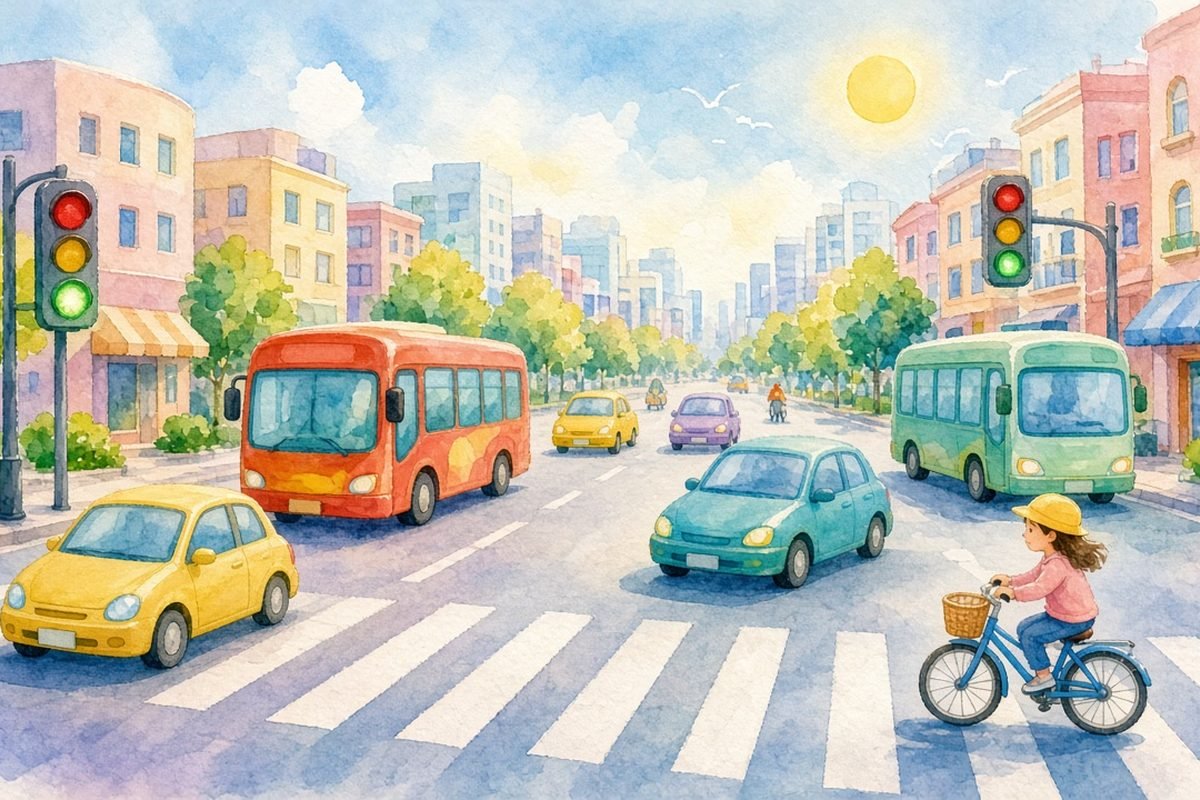
1. 교통[gyotong]
Meaning: traffic, transportation
Hanja: 交通
- 교통이 복잡해요.
The traffic is heavy. - 회사 근처는 교통이 편리해서 지하철로 출근해요.
Transportation near my company is convenient, so I commute by subway.
Expressions: 교통이 편리하다 (transportation is convenient), 교통이 복잡하다 (traffic is heavy), 교통 카드 (transit card), 대중교통 (public transportation). Related: 버스 (bus), 지하철 (subway), 택시 (taxi)
2. 구[gu]
Meaning: nine (Sino-Korean number 9)
Hanja: 九
- 구 더하기 일은 십이에요.
Nine plus one is ten. - 우리 회사 버스는 아침 아홉 시 구 분에 와요.
Our company bus comes at 9:09 in the morning.
Expressions: 구 층 (9th floor), 구 번 (number 9), 구월 (September). Note: Sino-Korean numbers 일, 이, 삼 … 구, 십 are used for floors, minutes, phone numbers and money. Native Korean 아홉 is used for counting things (아홉 개). Related: 아홉 (nine, native Korean), 십 (ten)
3. 구경[gugyeong]
Meaning: sightseeing, looking around, watching (for fun)
- 서울 구경을 했어요.
I went sightseeing in Seoul. - 쉬는 날에 동료들하고 축제 구경을 가기로 했어요.
On my day off, I decided to go see a festival with my coworkers.
Expressions: 구경을 가다 (to go sightseeing), 구경하다 (to look around, to watch), 시장 구경 (looking around a market). Related: 여행 (travel), 관광 (tourism), 보다 (to see)
4. 구두[gudu]
Meaning: dress shoes, leather shoes
- 구두가 예뻐요.
The shoes are pretty. - 공장에서는 구두를 신지 않고 안전화를 신어야 해요.
At the factory you must wear safety shoes, not dress shoes.
Expressions: 구두를 신다 (to put on dress shoes), 구두를 벗다 (to take off shoes), 구두 가게 (shoe store). Note: 신다 is used for shoes and socks, not 입다. Related: 신발 (shoes), 운동화 (sneakers), 양말 (socks)
5. 구십[gusip]
Meaning: ninety (Sino-Korean number 90)
Hanja: 九十
- 시험에서 구십 점을 받았어요.
I got ninety points on the test. - 공장에서 이 일을 끝내는 데 구십 분쯤 걸려요.
It takes about ninety minutes to finish this job at the factory.
Expressions: 구십 점 (90 points), 구십 분 (90 minutes), 구십 퍼센트 (90 percent). Note: 구 (9) plus 십 (10) makes 구십 (90). Native Korean 아흔 also means ninety. Related: 구 (nine), 십 (ten), 백 (hundred)
6. 구월[guwol]
Meaning: September
Hanja: 九月
- 제 생일은 구월이에요.
My birthday is in September. - 저는 작년 구월에 한국에 와서 일을 시작했어요.
I came to Korea last September and started working.
Expressions: 구월 일일 (September 1st), 구월에 (in September). Note: Korean months are a number plus 월: 일월 (January) … 구월 (September) … 십이월 (December). Related: 달 (month), 가을 (autumn), 추석 (Chuseok)
7. 국적[gukjjeok]
Meaning: nationality, citizenship
Hanja: 國籍
- 국적이 어디예요?
What is your nationality? - 외국인 등록증을 만들 때 서류에 이름과 국적을 써야 해요.
When you get an alien registration card, you have to write your name and nationality on the form.
Expressions: 대한민국 국적 (Korean nationality), 국적을 쓰다 (to write one’s nationality), 국적을 바꾸다 (to change citizenship). Related: 나라 (country), 여권 (passport), 외국인 (foreigner)
8. 권[gwon]
Meaning: volume, copy (counter for books and notebooks)
Hanja: 卷
- 공책 두 권 주세요.
Two notebooks, please. - 한국어를 배우려고 서점에서 한국어 책을 세 권 샀어요.
I bought three Korean books at the bookstore to learn Korean.
Expressions: 책 한 권 (one book), 공책 두 권 (two notebooks), 몇 권 (how many books). Note: 권 comes after native Korean numbers: 한 권, 두 권, 세 권. Related: 개 (counter for things), 책 (book), 공책 (notebook)
3. Mini Quiz
Answered 0 / 6
4. How This Series Works
Every weekday you get 8 new Level 1 words from the International Standard Korean Curriculum plus a quiz. Each post starts with a short review of the previous day’s words. Saturday has a 20-question weekly quiz, and Sunday has a word list summary of the week.
5. Next Time
Day 09: 귀, 귤, 그, 그것 and more!
Pingback: Voca Day 09: Level 1 Korean Words – International Standard Korean Curriculum - My Korea Note