Cold Wave Safety Period Starts Nov 15: 5 Rules Every Worker in Korea Should Know
Cold weather is on the way. On November 13, 2026, the Ministry of Employment and Labor (고용노동부) announced its winter plan to protect workers from cold-related illness (한랭질환). The government’s cold wave safety period (한파 안전 대책기간) runs from November 15, 2026 to March 15, 2027. If you work outdoors, in construction, on a farm, or in delivery, this plan is about you.
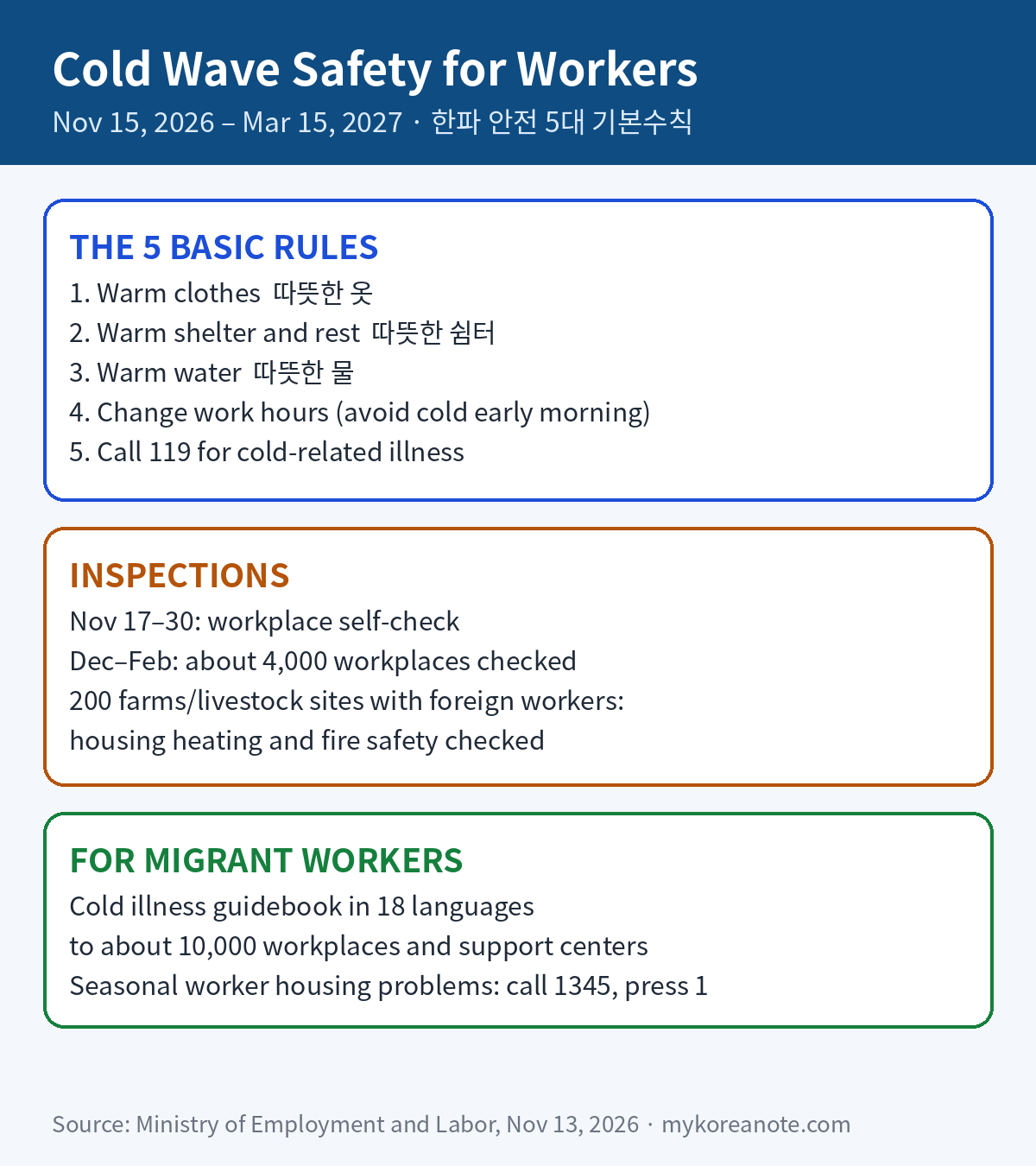
The 5 basic cold wave safety rules
The ministry asks every workplace to follow these 5 rules (한파 안전 5대 기본수칙):
- Warm clothes (따뜻한 옷)
- A warm shelter and rest (따뜻한 쉼터, 휴식)
- Warm water (따뜻한 물)
- Changing work hours (작업시간대 조정): when a cold wave warning (한파특보) is issued, avoid working in the coldest early-morning hours.
- Call 119 (119 신고) if someone may have a cold-related illness.
Right now these rules are recommendations. The ministry is revising the Rules on Occupational Safety and Health Standards (산업안전보건기준에 관한 규칙) to make them a legal health duty for employers. The draft was pre-announced from July 14 to August 24, 2026.
Inspections this winter
- About 30,000 workplaces at high risk from cold are under special management. Before a cold wave warning, labor inspectors and the Korea Occupational Safety and Health Agency (한국산업안전보건공단) hand out a guidebook on preventing cold-related illness.
- November 17 to 30: self-check period for these workplaces (cold risks and rest area standards).
- December to February: about 4,000 workplaces will be checked on the 5 rules.
- Focused inspections in construction, household waste collection, and farming and livestock grow from 200 sites last year to 600 sites this year: 200 construction sites, 200 waste collection workplaces, and 200 farms and livestock workplaces that employ foreign workers.
- At the farms and livestock workplaces with foreign workers, officials and local governments will check work-hour changes and the heating and fire safety equipment in workers’ housing (숙소 난방·소방시설).
Help for migrant workers
Because language can make safety information hard to get, the ministry will send the cold-related illness guidebook in 18 languages to about 10,000 workplaces that employ migrant workers, and to foreign worker support centers (외국인노동자지원센터) and employment training centers. Ask your employer or your local support center for a copy in your language.
Other support
- Construction: since October 27, 2026, the Occupational Safety and Health Act lists a cold wave as a reason to ask for a longer construction period. Safety budgets (산업안전보건관리비) can pay for shelters, heater rental, winter gloves, and heated vests.
- Street cleaners and early-morning outdoor workers: work-hour changes during cold wave warnings, plus 14,300 warm kits (gloves, hand warmers, and ear muffs).
- Delivery riders: information on 152 rest shelters for mobile workers (이동노동자 쉼터) nationwide is available on delivery apps and the KOSHA website.
Protect yourself
- Wear layers, a hat, and gloves, and keep your clothes dry.
- Drink warm water and take breaks in a warm place.
- If a coworker shivers hard, gets confused, or their skin turns pale or numb, move them somewhere warm and call 119.
- If your housing has no proper heating, you can report it. Seasonal workers can call 1345 and press 1. Read our post: Bad Winter Housing for Seasonal Workers? Report It by Calling 1345 and Pressing 1.
Minister Kim Young-hoon said that even though this winter is expected to be warmer than usual, sudden cold can still come and early mornings get very cold, so workplaces should change work hours during cold wave warnings and let workers rest in warm shelters.